

how to fix a bad reputation

How To Repair A Bad Reputation

It takes years to build a reputation, but one piece of damaging content could unravel it instantly. What shows up on your first page of search results isn’t just something for celebrities or politicians to worry about. It also matters for job seekers, founders, freelancers, executives, small business owners (and really everybody). 

If you’re in the middle of a storm right now, and your search results are telling a story you don’t want to be told, don’t worry. There are ways to repair your reputation. Here is where to start.

Steps to repair a damaged reputation:

  1. Uncover what kind of content is being published and by who
  2. Build a strategic plan to get the content removed or suppressed in search results
  3. Take action to address negative content and steps to get rid of it
  4. Take accountability if appropriate and address the issue head on
  5. Address unwanted content through search engine suppression. 
  6. Deliver on your promises.

1. Uncover What’s Going On

Before you do anything else, you need to know exactly what you’re dealing with. 

All negative search results come from somewhere. If you didn’t publish it, someone else did, and who that is matters. A disgruntled ex-employee who won’t stop leaving bad reviews needs a different approach than a court record that won’t budge from your first page. 

Start by asking: what kind of content is it?
  • Negative news articles or press
  • Bad online reviews
  • Past mistakes or incidents
  • False or defamatory content
  • Social media backlash or viral posts
  • Forum threads or Reddit discussions gaining traction
  • Outdated or misleading information ranking in search results

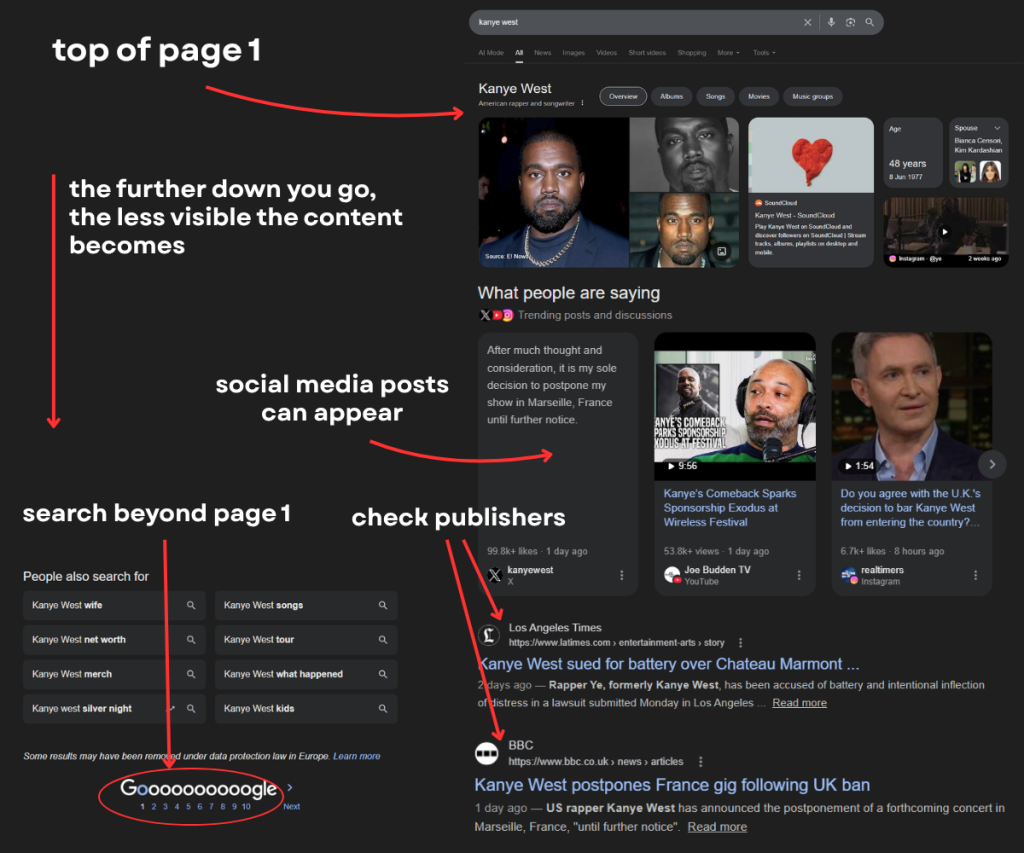
Then, look at the scope:

  • How deep does it go? (1 page vs. multiple pages of search results)
  • Where does it live? (Google, news sites, social media, blogs, forums)
  • Who is publishing it? (credible media vs. anonymous users)
  • How visible is it? (page 1 vs. buried further down in results)

When planning to tackle the content you find, go after the most visible content first to have a greater impact on your reputation. 

2. Build a Strategic Plan

Most people go wrong when they jump to reacting instead of strategizing. You don’t want to fire off emails demanding that the content be taken down or start publishing defensive posts.

You do want coordination, so you can tackle the content from all angles. This includes deciding what can be removed, what needs to be suppressed, and what positive content should be created to reshape your online presence.

Not everything can be removed from the internet. The internet doesn’t have a delete button, but in our experience, here’s what usually qualifies for removal:
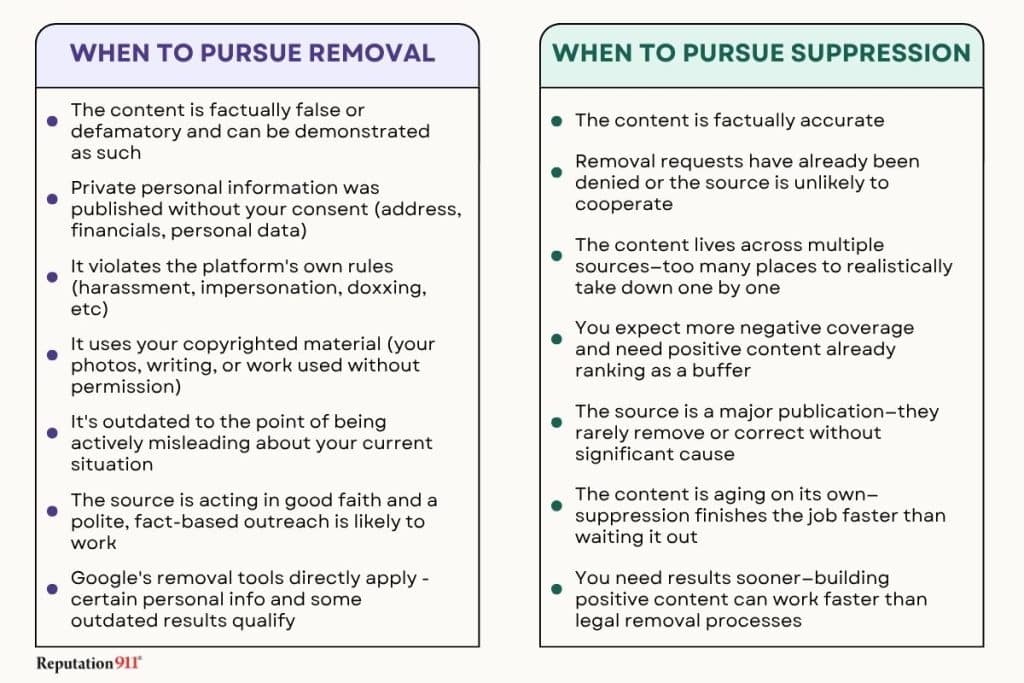
  • Personal or private information
  • Defamatory statements
  • Content that violates a platform’s terms of service
  • Copyrighted materials

Removal happens in two ways. Either get in touch with the website owner and make your case or use Google’s removal tools to de-index the content so it stops appearing in search results. 

When removal isn’t possible, suppression is. It works by creating positive content and optimizing it to rank under your name. As that content climbs in search results, the negative content gets pushed further and further down. Most people don’t scroll past the first page of Google. Getting something to page three is functionally the same as removing it.

Search engine suppression is an ideal strategy when:

  • There’s a high volume of negative content across multiple sources
  • Removal requests have been denied or are unlikely to succeed
  • You anticipate more negative coverage 
  • The content is factually accurate, but you don’t want people to see it

Need to Repair Your Reputation?

The experts at Reputation911 can help you remove negative content to help you fix your online reputation.

3. Take Action

Reputation repair happens on two fronts simultaneously–what people see when they search you and what’s going on behind the scenes in your business or personal life that caused the problem. You have to tackle both to truly solve the problem.

Online: 

  • Respond to negative reviews professionally and calmly. Your response is as much for future customers as it is for the person who wrote it.
  • Request removal of content that’s false, outdated, harmful, or violates platform policies.
  • Report policy violations directly through platform reporting tools. 
  • Suppress what you can’t remove with positive, optimized content. 

Offline: 

  • Identify the root cause. This could be a process failure, a customer experience issue, or an operational gap.
  • Improve the processes that contributed to the issue. 
  • If you’re “at fault” in a situation, avoid making the same mistake in the future. 
  • Communicate directly with anyone affected.

If the underlying problem isn’t actually fixed, the online cleanup won’t hold over time. People will just have the same problem, starting the cycle over again. 

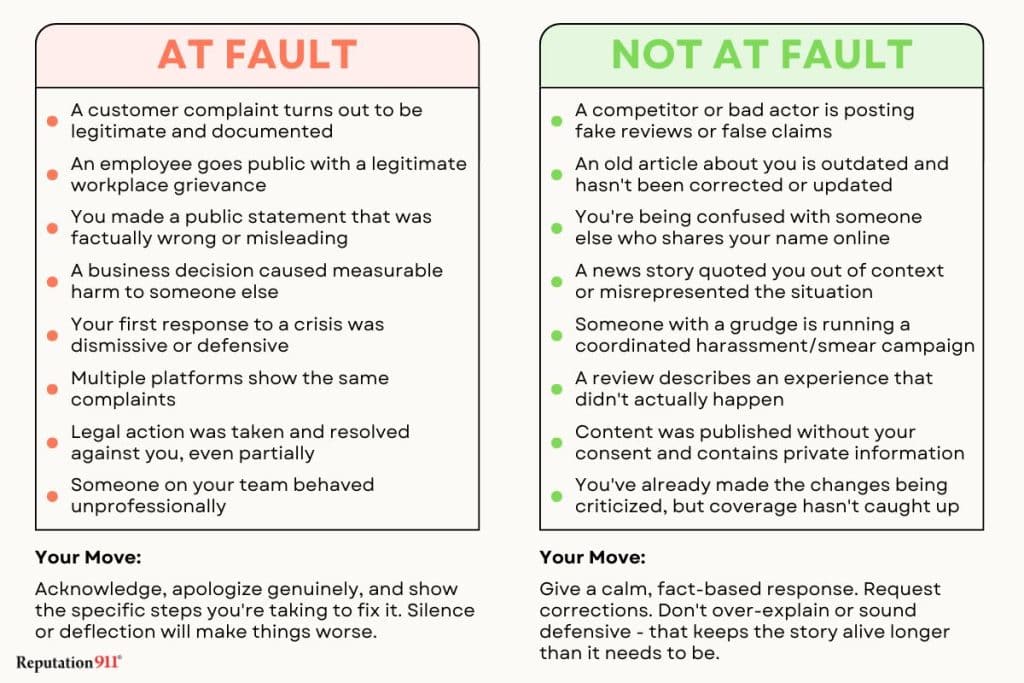
4. Take Accountability (If Needed) or Address the Issue

For this step, ask yourself: Did you actually do something wrong?

If the answer is yes:

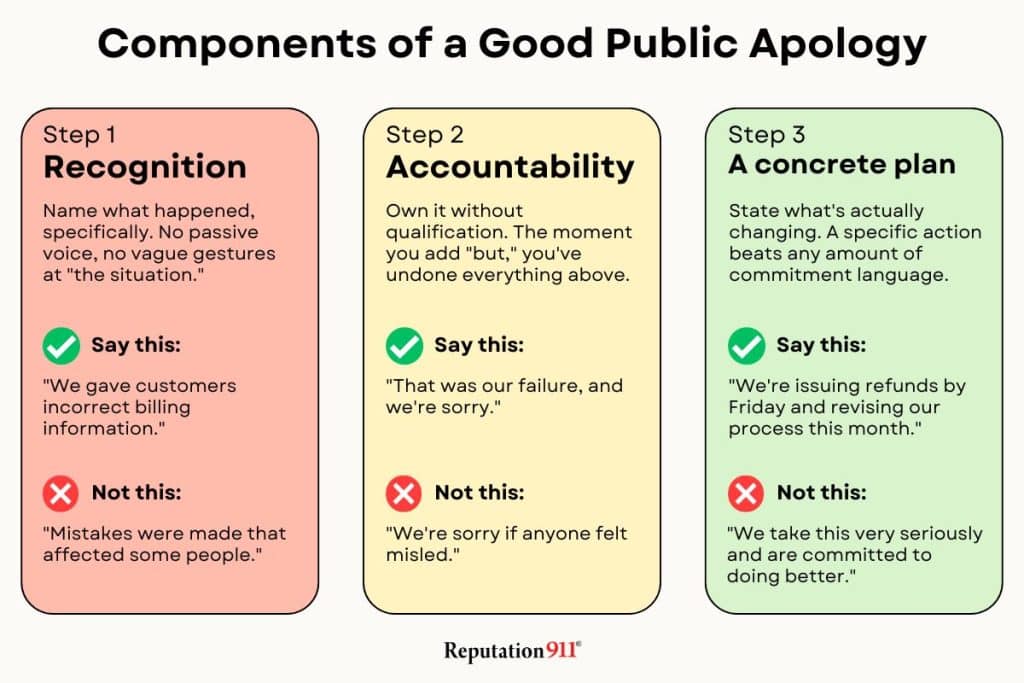
Apologize genuinely. That means being clear, concise, and without burying the admission under a wall of qualifications or excuses. A good apology has three things: recognition of what happened, genuine accountability, and a concrete plan to improve. 
Then, show the work. Anyone can say they’ve changed, but reestablishing trust means following through on whatever you committed to. 

If you’re not at fault: 

Don’t stay silent, but don’t overreact either. Give a calm, fact-based response–something that addresses the inaccuracy without sounding excessively defensive. Only escalate for a formal PR statement in high-visibility situations that are starting to materially impact your reputation. 

For false or misleading content, reach out to the publication or person responsible. Cite the facts, and be polite. Many people respond well to a straightforward correction.

Regardless of which path you’re on, avoid shifting blame. Even if warranted, it almost always makes things worse publicly. It looks reactive, and it keeps the story alive longer than it needs to be. 
5. Address Unwanted Content Through Search Engine Suppression

Now, you can address unwanted content through removal or suppression. 

Push for removal first if the content is false, outdated, violates platform policy, or infringes on personal data or copyright rights. If the source isn’t acting in bad faith (e.g., an old article that’s no longer accurate), a civil, fact-based outreach asking for a correction or update often works well.

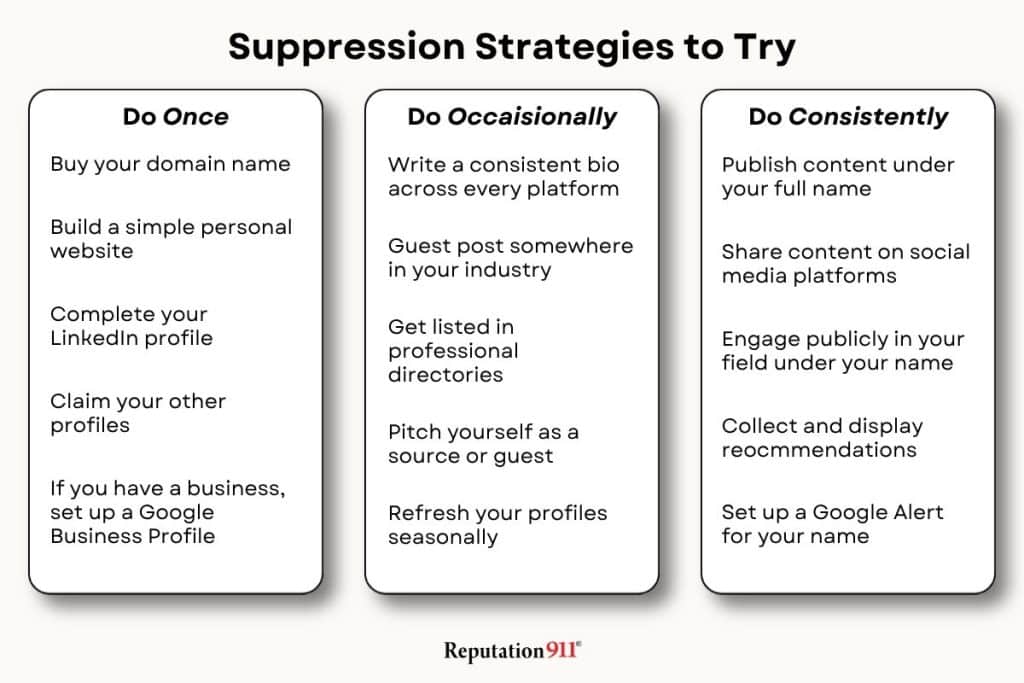
However, if removal doesn’t work, suppression is your next move. The goal is to fill the first page of Google results with content you control, or that reflects positively on you. Here’s where to start:
suppression to repair a bad reputation

  • Claim and optimize your profiles, like LinkedIn, Google Business, Facebook, etc.
  • Build or refresh your own website, optimized for your name.
  • Publish content (blog posts, articles, press releases, thought leadership, etc) consistently.
  • Earn features in press mentions, podcasts, guest articles, industry directories, etc. 

Suppression is an ongoing effort. The more consistent you are, the better protection your reputation will have. 

Check out these strategies to bury negative search results.

6. Deliver on Your Promises

Promise what you say—and prove it. If you commit to change, your actions need to consistently reflect that commitment. Reputations aren’t rebuilt in a single moment. They’re rebuilt in the hundreds of small choices and actions you make going forward. 

If you’ve made commitments during this process, publicly or privately, people are watching to see if they stick. Once broken, trust needs proof, not promises. So deliver on your promises, and make sure that proof is visible online. 

Then reinforce those improvements over time. Consistency is what rebuilds trust and sustains the long-term recovery of your personal brand or business.

Repairing Your Reputation Can Help You Move Forward

Reputation damage feels permanent when you’re in the thick of it. But in our experience, it rarely is. It does require honesty about what went wrong, a clear plan to address it, and the patience to see that plan through. The people and businesses who recover well are the ones who respond to reputation issues with intention rather than panic. 

The Reputation911 team provides reputation repair services to remove or suppress unwanted content in your search results. Contact us for a free consultation.

Get Your Free, Confidential Consultation