

Unwanted content, whether true or false claims, can impact your daily life, including your job, relationships, and overall quality of life. It can also shape how others perceive you online long before you have a chance to respond or correct the record.
Want to learn how you can get rid unwanted content online? Follow the steps in this guide.
If unwanted content is impacting you, take steps to get something removed from the internet:
As much as we wish it were possible to remove content from the internet entirely, it is not always possible. But there are some other ways to reduce the visibility of content in Google and other search engines and clean up your reputation.
Here are a few differences to consider:
Before taking any action, it’s important to understand its full reach, visibility, and potential harm.
Understanding the full scope will give you an idea of just how urgent a matter this is, and help you determine the best options for effective removal or mitigation strategy.
Why was this content published? Identify the intent or motivation behind the content, and whether it was published to harm your reputation, generate traffic or personal gain, or just posted unintentionally.
It will likely fall under one of the following categories:
Knowing this will help guide your choice of removal strategy.
Here are some real-life examples in action:
Scenario 1: A client called us because an image of them was published in a blog post about a different person with their same name living in the same area. The person the blog was actually about was a former teacher being investigated for misconduct. Our client’s image was wrongfully associated with the misconduct investigation.
Scenario 2: An entrepreneur called us about a misleading headline that accused them of being linked to an insider trading scandal. In reality, they were only listed as someone who attended the same conference as the person who was actually involved with the scandal. The publisher of the misleading headline ended up being a former coworker who was not fond of the entrepreneur.
These two scenarios call for different approaches to get rid of content.
In preparation for reaching out to a publisher or formal removal, gathering information and evidence can be very helpful in getting your content removed.
This will strengthen your case, and your outreach requests will be taken seriously.
Outreach may not always make sense for everyone.
To figure out if it’s right for you, think about whether the publisher was intentionally trying to hurt you or not. Getting a clearer sense of the intent behind the piece can help you decide whether outreach is the right path or not.
Here are a few instances of when to use outreach:
A publisher intentionally trying to hurt you is simply not going to comply with any request you send them, so it’s probably not worth your time. But if your situation fits the above criteria, the next step is reaching out strategically. To improve your chances of a successful outcome, follow these steps:
For best results to get something removed online, you should connect on a human level. Don’t get aggressive when you reach out. It’s more effective to reach out on a human level, explain the impact it has on you, and mention the little public benefit of having an article or content online.
Whether you tried outreach or decided it’s not the right strategy, the next step in the process to get something removed online is to attempt formal content removal requests.
These requests are based on either copyright issues, sensitive content, or platform violations.
Here are a few methods to try:
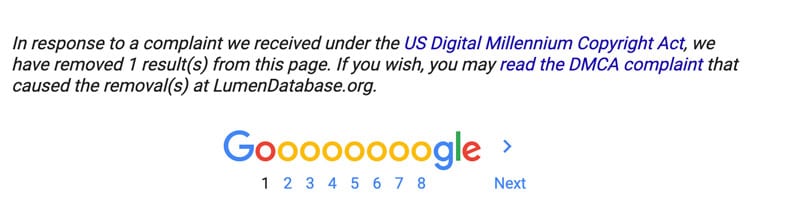
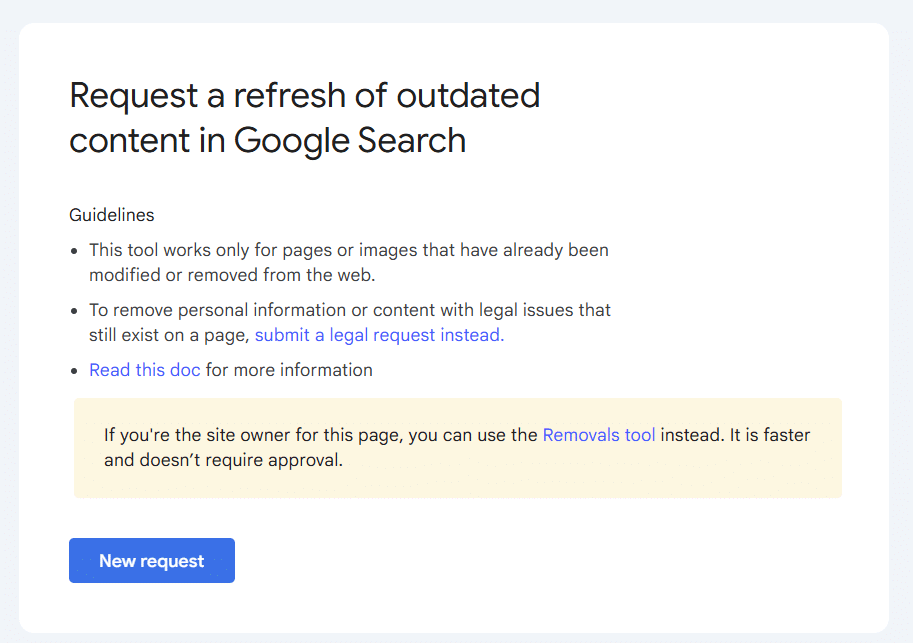
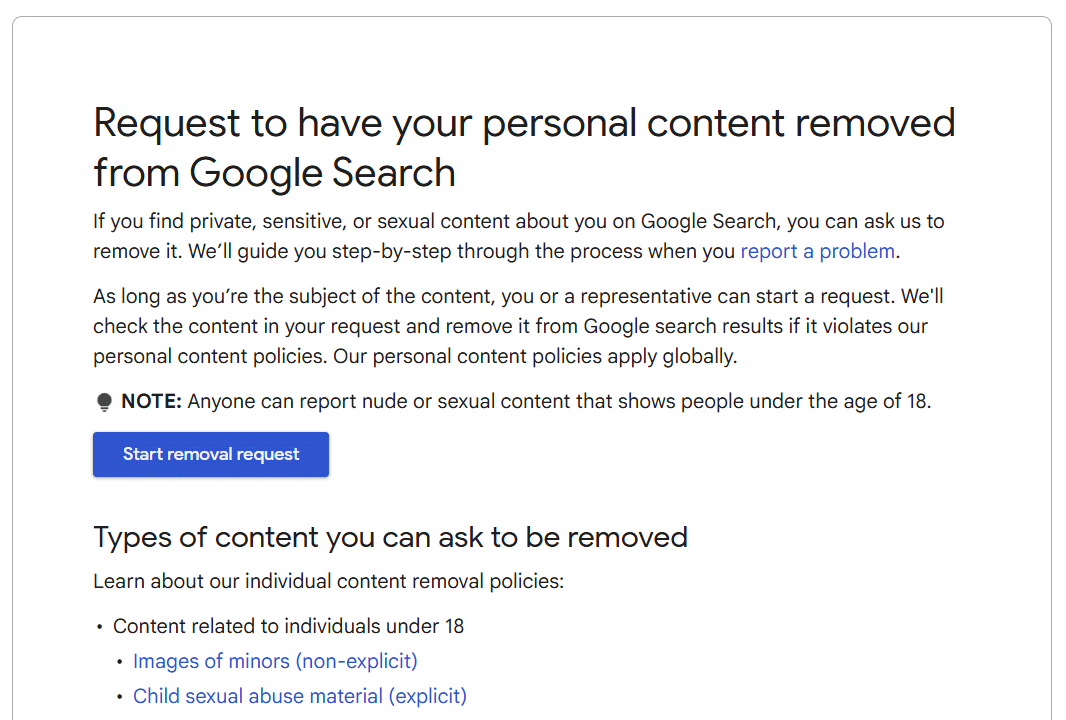
Pro tip: One of the downsides of going straight to Google removal tools is that it’s going to leave a trace. Google’s Lumen database puts itself at the bottom of every search query that has a request.
It’s important to include clear URLs, screenshots, and supporting documentation in each request to improve approval likelihood and speed up the review process.
If direct outreach was considered or tried, and formal removal methods were attempted or didn’t apply, the next step is search engine suppression
Search engine suppression is the process of building up and updating content with positive sentiment in order to push down any negative or unwanted search results.
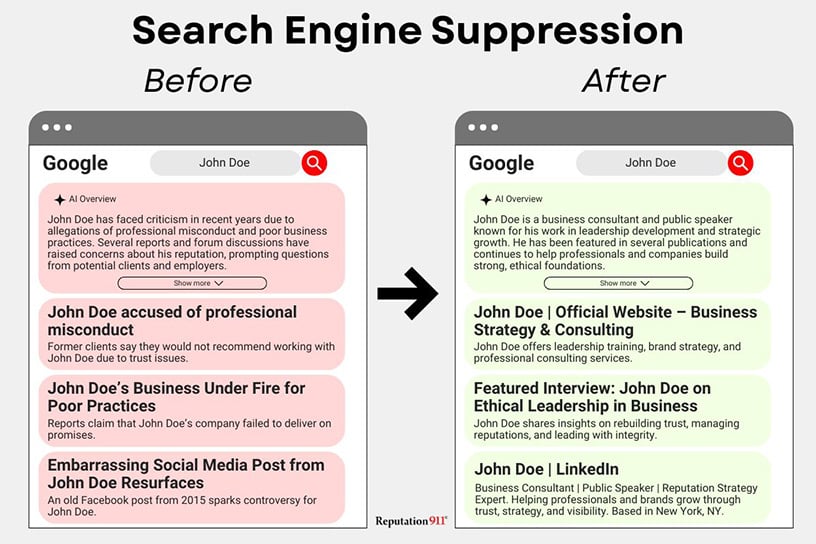
Follow these steps:
Certain scenarios may call for legal action to effectively remove infringing or defamatory content and protect your reputation and rights. Because it is more of a drawn-out process, this strategy is reserved for later.
When to use this strategy:
When other methods fail, and your rights are clearly violated, legal steps should be taken. A few examples when it makes sense:
To get this process started, follow these steps:
Continuously track your online presence to ensure that removed or suppressed content does not resurface.
Set up Google Alerts for your name to get notified when you are mentioned anywhere online.
You can adjust SEO, content, and PR strategies as needed to maintain control over your online reputation.
You don’t have to live with the stress of negative content circulating on the internet forever. You’re not alone, and you do have options to clean your online profile.
Whether you want to try the DIY approach with one of the strategies outlined in this article, or would like to work with an ORM agency that delivers personal reputation management services, you can get rid of unwanted results about you online.
At Reputation911, we help you remove unwanted content appearing under your name in search engines and across the internet. Our team works to suppress negative or outdated information while creating and building up positive articles and content to ensure that your online presence reflects who you really are.
Sometimes, yes—but it depends on where the content is posted and who controls it. If you don’t own the website or account, you can request removal, but there’s no guarantee the host will comply. When removal isn’t possible, you can often remove it from Google search results or suppress it so it’s much harder to find.
Start your process by attempting to remove the content in question from the source. Contact the website owner, platform, or administrator and request that the post, image, or page be deleted. If you control the account (like social media), delete it directly—then use Google’s tools to clear cached/outdated versions.
If the site owner doesn’t respond or refuses to remove the content, you still have options. You can file a removal request with Google if the content violates privacy, copyright, or legal policies, or use search engine suppression to push the result off page one so it’s far less visible.
Yes. Google can de-index a page or image from search results if it meets their removal criteria (such as personal information, explicit images, copyright infringement, or pay-to-remove schemes). The content may still exist on the website, but it won’t appear in Google searches.
Once content is removed from the source, Google typically updates its index within a few days to a few weeks. Using Google’s “Remove Outdated Content” tool can speed up the process, but full removal may take up to 30 days in some cases.
Removal eliminates content from the source or from Google’s index entirely. Suppression doesn’t delete the content—it uses SEO strategies to push unwanted results off the first page of search results, where most people never look. Both approaches are often used together.