


Your reputation is valuable, and most people don’t realize its true cost of their reputation until it’s under fire. One viral post, outdated news article, or AI-generated summary can cost a business millions in lost revenue or derail an individual’s career overnight.
So, how much does reputation management cost? This is the question we get from every client we talk to.
The truth is that reputation management isn’t a one-size-fits-all product. This strategic service scales based on the complexity of each case. While you can try to manage it yourself, or a professional agency brings the technical SEO, legal knowledge, and PR connections needed to clean up your reputation the first time correctly.
Key Takeaways:
On average, the cost of reputation management services ranges from $500 to $25,000+ per month, while specialized crisis projects can exceed $50,000.
Why? Because “reputation” means something different for a local cafe or jobseeker than it does for a Fortune 500 company or CEO.
Every situation is unique, but here are the typical prices you can expect:
Service Tier | Price Range | Description / Best For |
Software & Automated Monitoring | $50 – $500 / month | Ideal for individuals or small brands needing DIY alerts and basic review tracking to stay informed without active intervention. |
Professional Repair & Suppression | $500 – $7,000 / month | This is the most common choice for hands-on help to push negative search results off the first page using SEO services. |
Permanent Content Removal | $500 – $15,000+ per link | Specialized, often one-time investment focused on deleting specific links, images, court cases or defamatory articles at the source. |
Enterprise & Crisis Management | $10,000 – $50,000+ / month | 24/7 support for public figures or large corporations facing viral incidents, major news leaks, or coordinated digital attacks. |
The cost of reputation management heavily depends on your specific situation. Here is a breakdown of the factors that affect the cost:
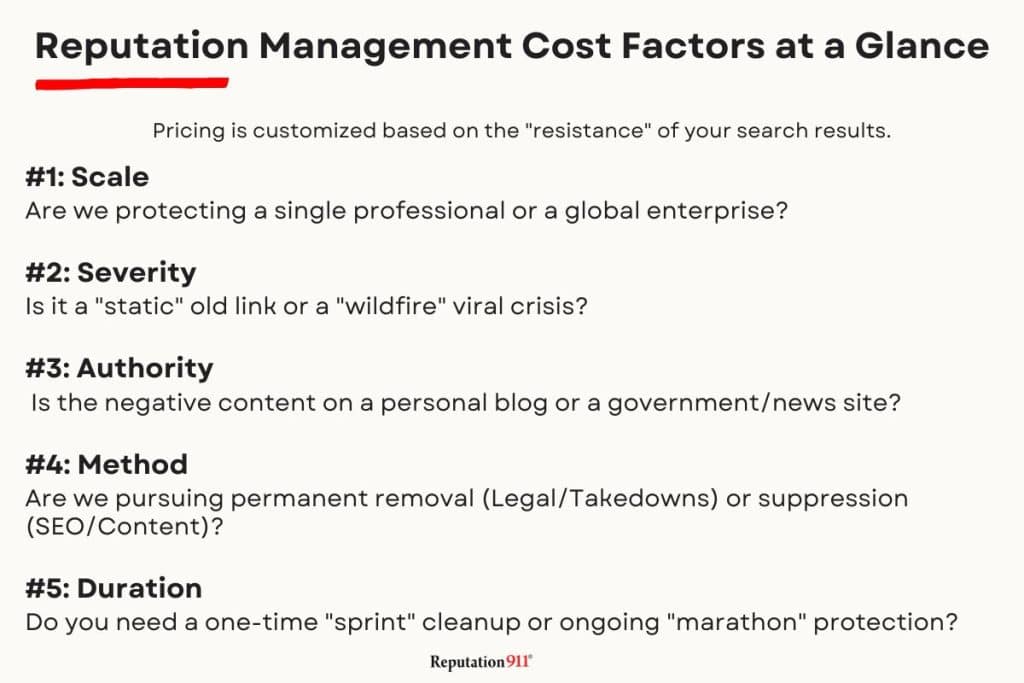
The size of your name or brand is a primary driver of cost. In reputation management, a larger digital footprint will likely require more hours, more content, and monitoring to maintain, driving up the price of services.
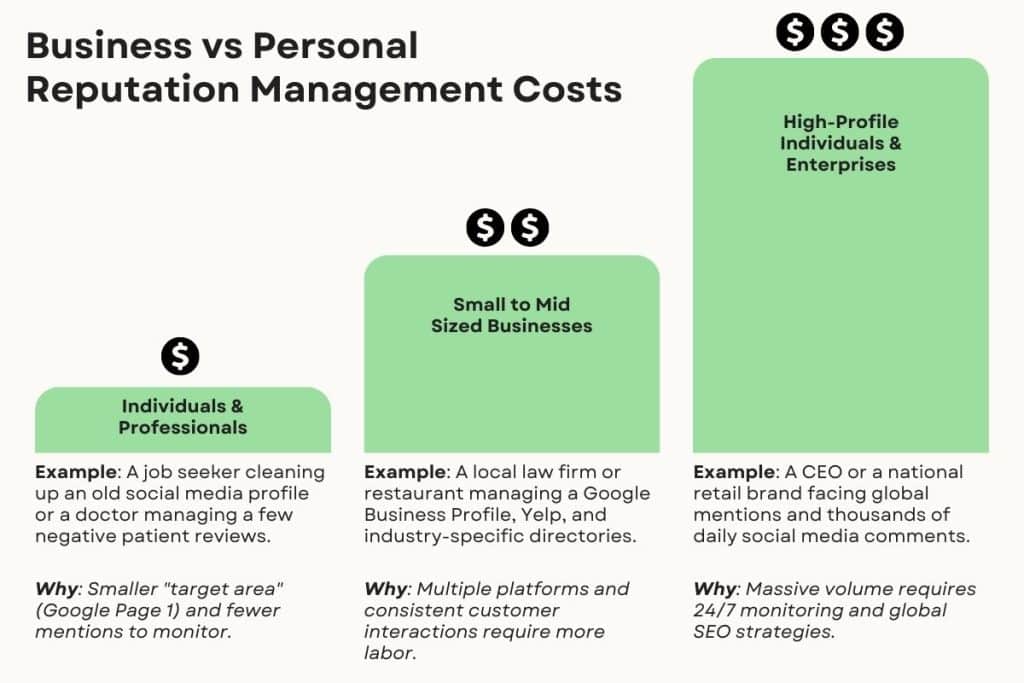
These campaigns are usually the most affordable because the online presence is smaller and the search result page isn’t as competitive. For personal reputation management, the focus is typically on a few specific links or social profiles, which require fewer resources to achieve results.
Mid-sized brands typically have more of an online presence, including platforms like Google Business Profile, local directories, customer review sites, and business social media accounts. Because there is a higher volume of mentions and customer interactions to manage, customers will pay more for reputation management services.
Public figures, CEOs and major corporations have a large digital footprint. Reputation management campaigns for high profile individuals may involve 24/7 monitoring and global strategies. Even a single mention on a high-authority news site or viral thread can instantly impact the brand across multiple platforms.
The price of reputation management often comes down to how quickly negative content spreads online. Sometimes it’s like stamping out a campfire with your foot, and sometimes it’s like putting out a wildfire with an army of firetrucks. The more severe the situation, the more resources needed.
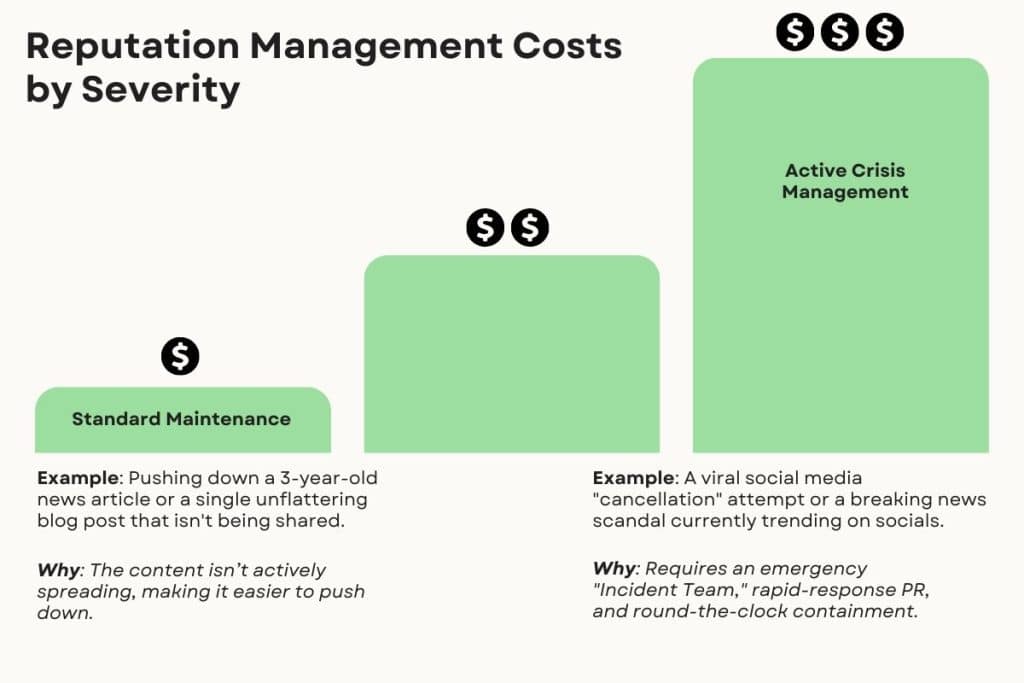
Standard maintenance and reputation repair services are a more affordable option for people dealing with static issues. These could be an old local news article or a few isolated bad reviews. They’re not actively spreading, so they don’t require as much work to remove or suppress.
But for reputation crisis management, you can expect to pay a premium for an emergency-level response. Large, viral crises require a dedicated team working around the clock to coordinate PR statements, respond to removal requests, and suppress large volumes of content.
The price of your campaign often reflects how much resistance we face in search results. Not all negative links are created equal, and some are simply harder to move than others.

Here’s what to consider:
High-authority media is harder to suppress than low-authority blogs. If the negative content is on a low-traffic personal blog, it’s easy to outrank. But if the content is published by a major news outlet or lives on a government website with high Domain Authority, it’s more difficult to outrank.
The type of content determines what options you have for removal.
Defamatory or illegal content is a great candidate for full removal from the source, and may require legal action. This is content that would be factually false, violates privacy laws, or infringes on copyright.
But opinion-based content (like reviews or thought pieces) is protected speech and is usually impossible to remove at the source. This type of content calls for suppression, and creating a long-term strategy to build up positive content, and push down the negative search results.
The more content there is, the more complex the situation gets. More content means more resources need to go to removal efforts or more aggressive SEO strategies for suppression.
Dealing with one negative article is pretty straightforward. But when 50 different news outlets pick up the same story, and everyone starts talking about it across multiple social media platforms… it gets complicated.
Reputation management companies address negative content in two main ways: removal and search engine suppression.
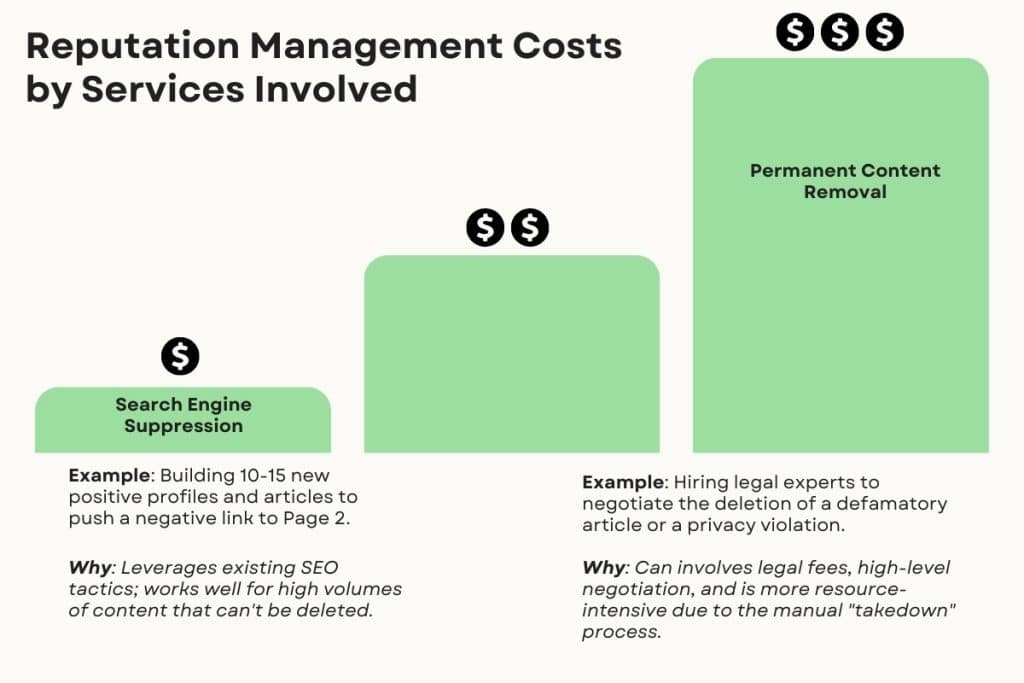
When content removal is possible, you can delete it from the source entirely. Here are some cases where that is an option:
In other cases, search engine suppression is the only option (though it can be a better, longer-lasting solution). Suppression works by promoting positive, authoritative content to push negative results lower in search results, reducing their visibility and impact.
The cost of suppression depends in part on how much positive content already exists. If strong assets are already in place, a reputation expert can leverage them strategically through SEO. However, building new websites, directories, and blog content can increase costs.
Suppression can be more cost-effective if you’re dealing with a high volume of content, as it pushes it all down at once. This can also protect your search results if new negative content appears in the future.
Content removal usually costs more than search engine suppression because it:
Ultimately, a reputation management expert will recommend the best option for your situation and the cost of services.
The duration of your recommended plan factors into the total cost of reputation management. It’s like paying for a monthly gym membership versus hiring a personal trainer for one session. The timeline matters.

One-time projects can run $2,500-$15,000+. You’re paying for a sprint, not a marathon. The company tackles a specific problem (removing one damaging article or suppressing a review), and you’re done. The upfront cost is higher per deliverable, but there’s no monthly retainer.
Ongoing reputation management is typically a pay-per-month model ($500 – $10,000+). The fees may be considered steep, but they’re buying you protection. Over time, search algorithms change, new reviews may pop up, or someone could publish new negative content. Regular maintenance can keep that from affecting your reputation.
Continuous online monitoring is often bundled with ongoing plans, but can run standalone for $50-$500/month with automated tools. It’s cheaper than full-service management, but it just alerts you to fires. It doesn’t put them out. You still need people to respond to reviews, social media, news, AI-generated summaries, and more.
Longer commitments usually unlock better monthly rates, but short-term projects make sense if you’re dealing with a contained issue that won’t require constant attention. Your specific situation determines which model will save you money.
Get a free consultation from the reputation management experts at Reputation911. We can review your situation and provide you with a price based on your options.
In addition to content removal and suppression, there are supporting services that can help you maintain your reputation:
This is the engine behind search engine suppression. Agencies create high-quality articles, press releases, blog posts, and optimized web pages targeting your name or brand. But beyond actively outranking negative content, regular SEO and content creation can maintain your positive reputation long-term.
Cost drivers include:
Active, credible profiles boost your authority in search results and give you control over the narrative. After building a social media presence in a reputation repair campaign, keeping those profiles active helps further boost your online presence.
Pricing depends on:
Not every case needs a lawyer. But if you’re dealing with defamation, copyright infringement, or privacy breaches, legal expertise may be necessary.
Fees vary depending on:
Reputation management isn’t cheap, but ignoring the problem can cost you. A single negative article ranking on page one can cost you clients, job opportunities, and years of credibility you’ve worked hard to build.
Instead of asking “Can I afford reputation management?”, the real question is “Can I afford not to invest in it?”
You don’t have to deal with reputation challenges alone. An experienced reputation management agency will assess your situation, explain your options, and provide transparent pricing before you commit to anything.
Ready to take control of your online reputation? Contact Reputation911 for a free consultation – we can understand your specific situation and what it costs.