
Guide your small business’s online reputation instead of leaving it uncontrolled.
Every small business has an online reputation, whether you manage it or not. What people see and share influences whether or not they become your customer. By taking control of your online presence, you can guide that story instead of letting others define it for you.
In this guide, you’ll learn what reputation management is, why it matters for small businesses, and practical strategies you can start using today.


Online reputation management (ORM) is the process of influencing how people perceive your business online.
For small business owners, this means taking control over the content you publish, how you respond to customer feedback, and addressing negative or false content when necessary. While you can’t control everything people say about your business, you can take steps to shape the conversation in your favor.

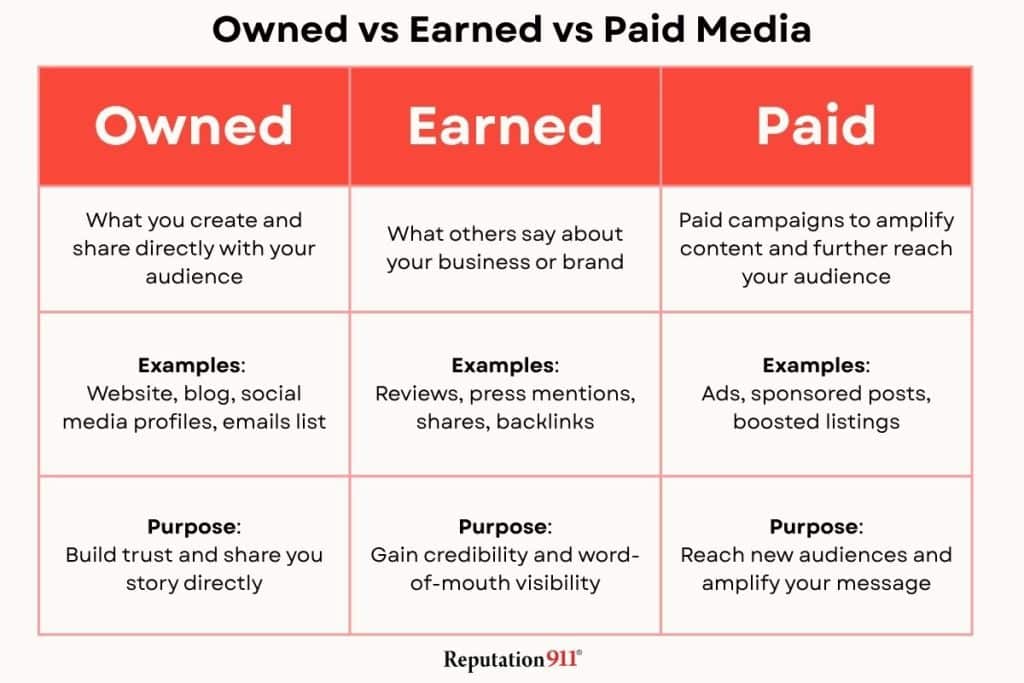
The reputation of your business goes way beyond your name. It’s shaped by three key types of media:
Each type supports the others:
Together, they create a complete picture of your business online—helping you build trust, attract customers, and stand out in search results.

When it comes to your business reputation, while there’s a lot to lose, there is just as much to gain with a positive reputation.
Your business’s online reputation exists whether you like it or not. 71% of consumers check online reviews when researching local businesses. Every search result contributes to what potential customers think about your business before they ever walk in the door.
The truth is, investing in your brand’s reputation is essential to maximize your online presence, whether it’s through marketing, public relations, or ongoing reputation management.
Here are five ways reputation management benefits small businesses:
For small business owners, this means taking control over the content you publish, how you respond to customer feedback, and addressing negative or false content when necessary. While you can’t control everything people say about your business, you can take steps to shape the conversation in your favor.
Today, 98% of consumers read online reviews before making a purchase. Even a few negative reviews can cost your business clients—but proactive reputation management ensures you respond effectively and maintain a trustworthy image.
Consumers are more likely to buy from businesses with positive reviews and a strong online presence. A good reputation encourages loyalty, repeat business, and even allows you to charge premium prices for your products or services.
Your business reputation affects whether talented employees want to work for you. Review sites like Glassdoor give job seekers insight into your company culture, so maintaining a positive image helps recruit and retain top talent.
A strong online reputation makes people more willing to work with you—whether that’s customers, collaborators, or local partners. Being known as a trustworthy and respected small business can lead to more sales, partnerships, and growth.
Investing in your reputation will see positive results, shaping perception of your audience and you gain goodwill in the case of a crisis.

Effective reputation management operates across three key phases:

Sometimes your brand’s reputation takes a hit, whether your business is ultimately at fault or not.
What matters most is how you respond. Acting quickly, professionally, and thoughtfully can prevent escalation and show accountability. A calm, measured response reassures customers, addresses concerns, and can even turn a reputation challenge into an opportunity to build trust.
Start by understanding what’s being said, where it’s appearing, and who it impacts.
Is the issue tied to:
Identifying the source helps you decide the best next step. A negative image, article, or court record can affect how customers see your business, so it’s important to act quickly and strategically.
In order to decide how to address negative or unwanted content about your small business, it’s important to identify what type of content you’re dealing with, which varies on who is deemed at fault, the intent of the content, and legality.
Negative content typically falls into 5 categories:
Type of Negative Content | Definition | Examples |
Mistakes | Content where you are at fault for a mistake, which may negatively impact your reputation, especially if widely shared. |
|
Misinformation | False or inaccurate information spread without malicious intent, but still potentially misleading. |
|
Defamatory Content | False or malicious statements that harm an individual’s or organization’s reputation (includes slander or libel). |
|
Discriminatory Content | Content that promotes harm, division, or prejudice, and often violates platform guidelines or legal regulations. |
|
Illegal Content | Content that violates laws and can lead to criminal charges or legal consequences. |
|
If the issue is limited in scope and can be resolved through a takedown, removal is often sufficient. Removing content from the internet typically means asking the platform, publisher, or website owner to take the material down at the source so it no longer appears online:
Sometimes removal isn’t possible, but the impact can be minimized through suppression—pushing the content lower in search results or diluting its reach:
Legal action is necessary when harm is severe, content remains online despite takedown efforts, or laws have been broken:
Once the immediate threat is addressed, implement policies to prevent future issues:
Show that your business is taking concerns seriously:
Trust is rebuilt over time through consistent action:
Reputation recovery takes time, but consistency rebuilds trust. Consistent, thoughtful actions combined with proactive monitoring will help gradually restore trust with customers, employees, and the community.

For small business owners, your reputation is one of your most valuable assets. Negative reviews, social media complaints, or online news can quickly harm your brand, reduce customer trust, and impact revenue. Effective crisis management helps you protect your business, respond strategically, and recover stronger.
Small businesses can face reputation crises from many directions, often with little warning. Here are a few common sources of crises:
If not addressed promptly, negative online content spreads fast and can disproportionately affect trust, local reputation, and growth.
Before a crisis hits, small businesses can protect themselves by strengthening their online presence. Laying the groundwork early makes it easier to respond quickly and effectively when issues arise.
When a business reputation crisis occurs, how you react in the moment can make all the difference. A clear, timely, and well-managed response helps control the narrative and prevent further damage.
After the immediate crisis has passed, the focus shifts to rebuilding trust and restoring your online reputation. This stage is all about reinforcing the positive and pushing down any lingering negative content.
Even small businesses can face fast-moving online crises. By preparing in advance, responding strategically, and rebuilding carefully, small business owners can protect their reputation, maintain customer trust, and continue to grow.

Even small businesses can face fast-moving online crises. By preparing in advance, responding strategically, and rebuilding carefully, small business owners can protect their reputation, maintain customer trust, and continue to grow.
Small business owners can use several tools to monitor, track, and respond to online mentions in real time. These help you stay aware of what people are saying about your brand across search engines, review sites, and social media.
1. Track Reviews Across All Major Platforms
Regularly monitor Google, Yelp, Facebook, and industry-specific sites to stay aware of customer feedback.
2. Use Social Listening Tools
Keep an eye on mentions, comments, and hashtags across social media to spot emerging issues early.
3. Set Up Google Alerts for Your Business Name
Receive real-time notifications whenever your business is mentioned online.
4. Respond Promptly and Professionally
Address both positive and negative feedback quickly to show customers you’re attentive and engaged.
5. Analyze Trends and Identify Patterns
Look for repeated complaints or recurring themes to uncover underlying issues and prevent future problems.
Regularly search your business to see what customers see. Here’s a quick way to do it:
Make this part of your routine to spot issues fast and address inaccurate or outdated results before they affect your reputation.
Small business owners often try to handle negative reviews, social media complaints, or PR issues themselves—but some situations require expert help. Consider hiring a reputation management company when:
If multiple bad reviews appear on Google, Yelp, or industry-specific platforms, it can quickly start affecting sales and customer inquiries. Struggling to respond consistently and professionally can make the problem worse, signaling it’s time to get expert help.
A single negative post, comment, or video can spread rapidly online, while trending hashtags or viral memes can further damage your brand image. If you lack the time or expertise to monitor and respond in real time, a reputation management company can help contain the situation.
When local or online news covers a negative story about your business—or misinformation starts circulating—it can erode customer trust. Coordinated messaging and professional guidance are essential to manage stakeholder communications and protect your brand.
Employee misconduct, customer complaints, or service failures visible online can seriously affect your reputation. Likewise, data breaches or privacy concerns can damage customer confidence, requiring immediate and strategic management.
If Google or other search engines show negative articles, reviews, or complaints first, it can overshadow your positive efforts. When DIY strategies to boost your reputation aren’t working, professional intervention can help push negative content down and restore your online image.
If you don’t have the tools or staff to track and manage your online reputation effectively, small issues can quickly grow into larger crises. Hiring a professional can help you stay ahead, prevent escalation, and protect your brand before problems spiral out of control.
If negative content is hurting sales, customer trust, or your brand image—and you don’t have the time or expertise to address it effectively—a reputation management company can help. Professionals can protect your business, control the narrative, and rebuild a positive online presence with a strategic approach.
When choosing a reputation management company, look for those that:
At Reputation911, we specialize in helping small businesses look their best online. From local shops to service providers, our reputation management company delivers tailored reputation management solutions that protect your brand and support growth. Contact us today for a free consultation.
