

Yes, you can remove or hide the photos of your home from real estate sites like Zillow, Redfin, and Trulia, and you can get your house blurred on Google Street View too. For most of these, it takes less effort than people expect.
Maybe your home sold years ago and the interior shots are still sitting online. Maybe you’d rather not have your address double as a walkthrough for anyone who searches your name. Either way, there are two ways to fix it: ask your listing agent to pull the photos at the MLS level, or claim your home directly on each site and hide the photos yourself.
Below, we’ll walk through both routes, then give you the exact steps for each platform so you can pick what fits and get it handled today and protect your online privacy.
What Are Your Options?
You’ve got two paths here, and which one makes sense depends on how much control you want versus how much time you’re willing to put in.
Option 1: Contact your listing agent to request MLS-level removal
This is the fastest route, and the one with the widest reach. Since the Multiple Listing Service (MLS) is the original source that most real estate sites pull their photos and details from, a removal request made at that level can cascade down to Zillow, Redfin, and Trulia all at once, without you having to log into each site individually. If you sold the home, reach out to the agent who represented you. If you bought it, your own agent (or the seller’s, if you don’t have one) can usually make the same request.
The tradeoff: you’re relying on someone else to follow through, and MLS rules sometimes require one photo to remain on file for appraisal or pricing purposes. It’s still worth starting here first.
Option 2: Claim your home yourself, platform by platform
If you don’t have an agent relationship to lean on, or you just want direct control, you can create an account on each site, verify that you own or live at the property, and hide the listing photos from your end. It takes a bit longer since you’re repeating the process across multiple platforms, but nothing is stopping you from doing it today.
One thing worth knowing upfront: on most of these sites, “removing” photos really means hiding them from public view on your claimed listing page, not deleting them from the underlying MLS record. That’s an important distinction if your goal is privacy rather than erasing the sale history altogether.
Below, we’ll walk through the exact steps for each platform, Zillow, Redfin, Trulia, and Google Street View, so you can knock out whichever ones apply to you.
Platform-by-Platform Instructions for Deleting Home Photos
Yes, you can remove or hide the photos of your home from real estate sites like Zillow, Redfin, and Trulia, and you can get your house blurred on Google Street View too. For most of these, it takes less effort than people expect.
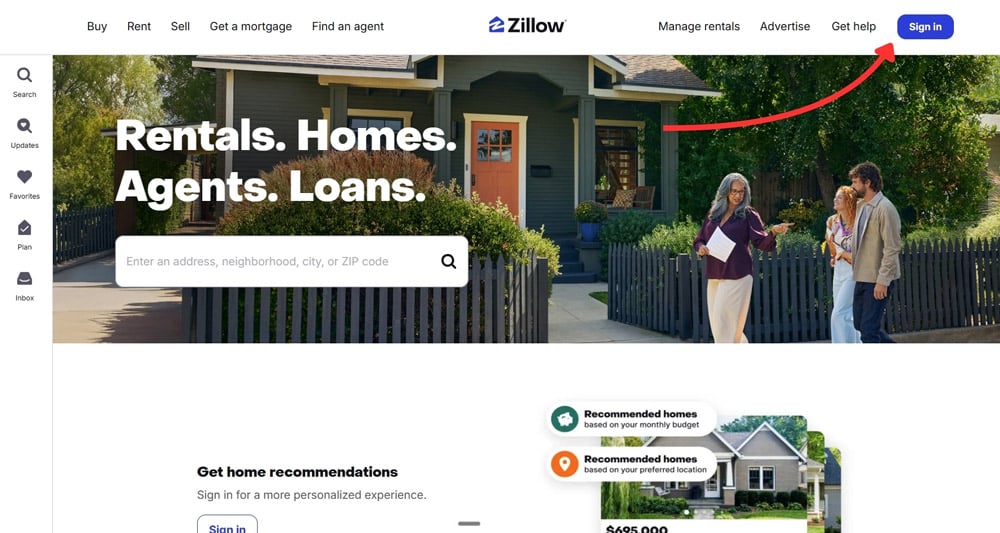
Step 1: Sign in to your Zillow account, or create one if you don’t already have it.
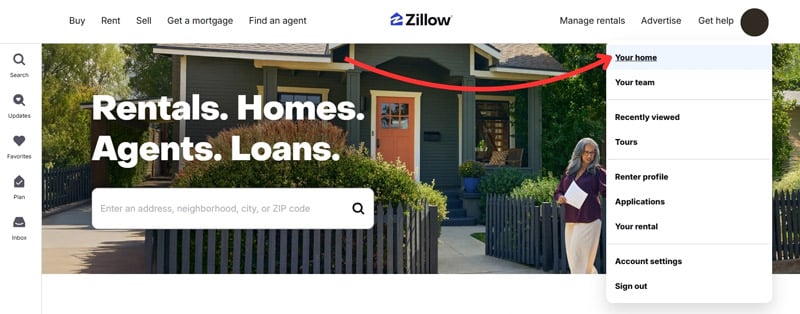
Step 2: Click your profile icon in the top right corner and select “Your Home.”
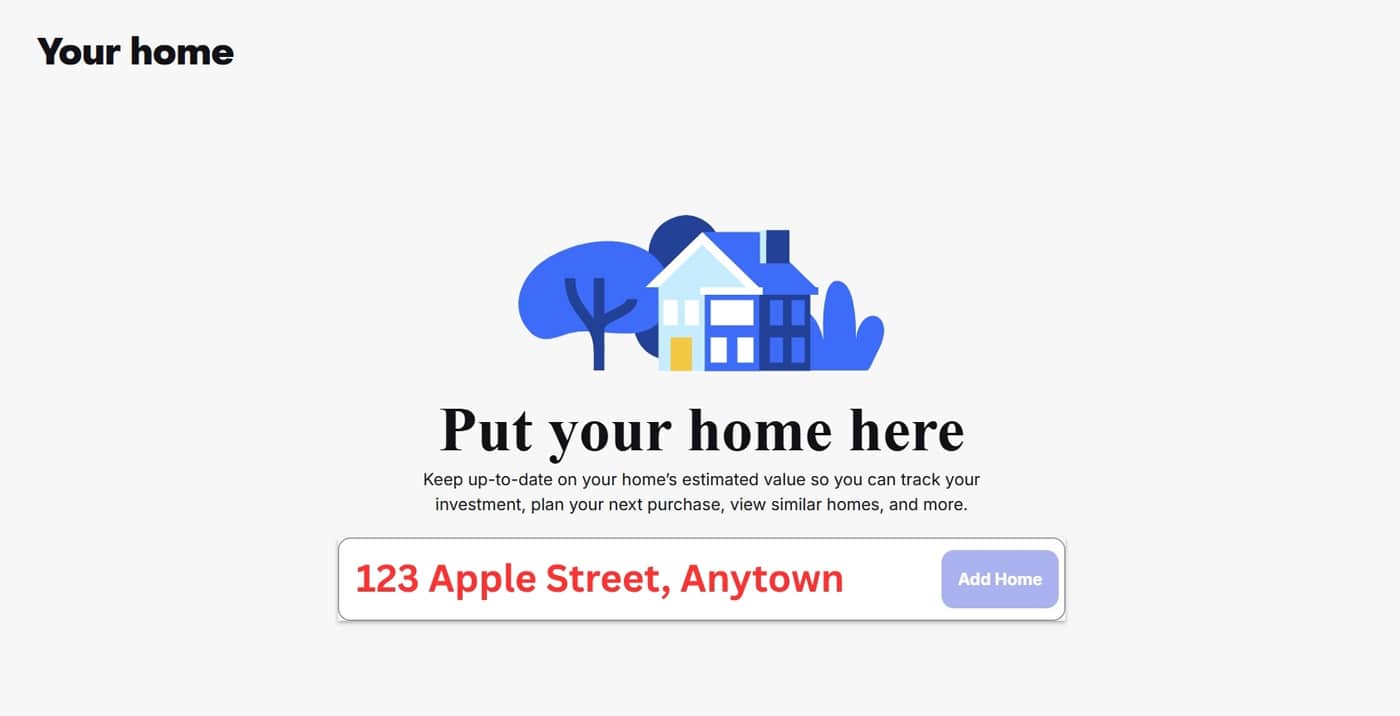
Step 3: Type your address into the search bar.
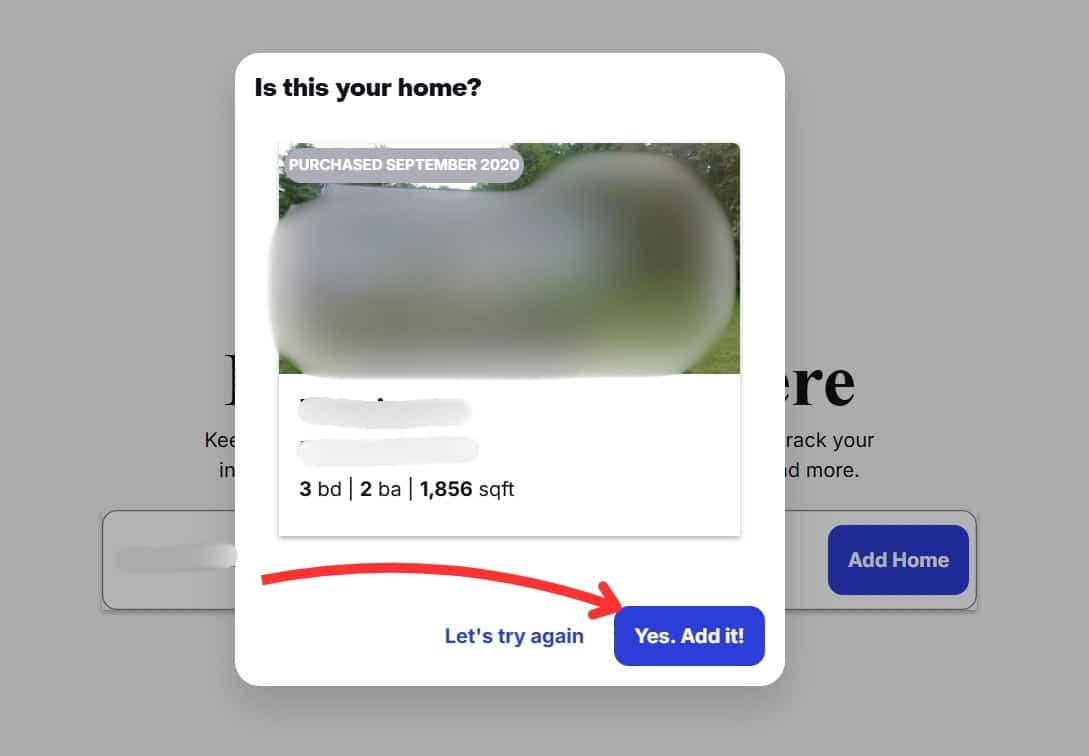
Step 4: When your home appears, click “Yes, Add It!”
Step 5: Click “Edit Facts.” If you haven’t verified ownership yet, you’ll need to do that before you can remove any photos.
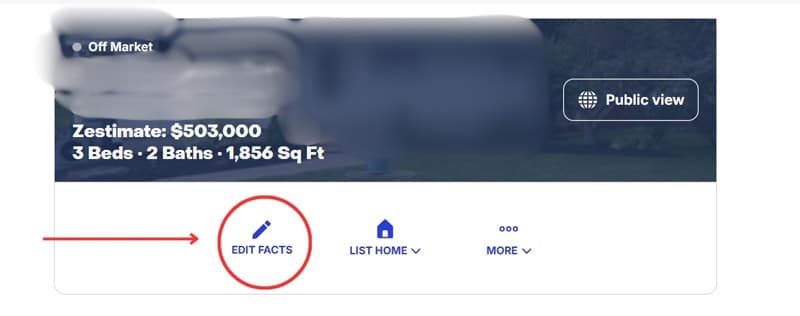
Step 6: Once ownership is verified, click “Delete All Photos” to remove them entirely, or “Hide Photos Displayed on Your Home’s Zillow Page” if you’d rather keep them on file but out of public view.
Step 7: Click “Save Changes” at the bottom of the page.
Trulia pulls its listing data directly from Zillow, so once you remove or hide your photos there, Trulia should update to match automatically.
If the photos are still showing after a day or so, contact Trulia support with the property URL and proof of ownership to request removal directly.
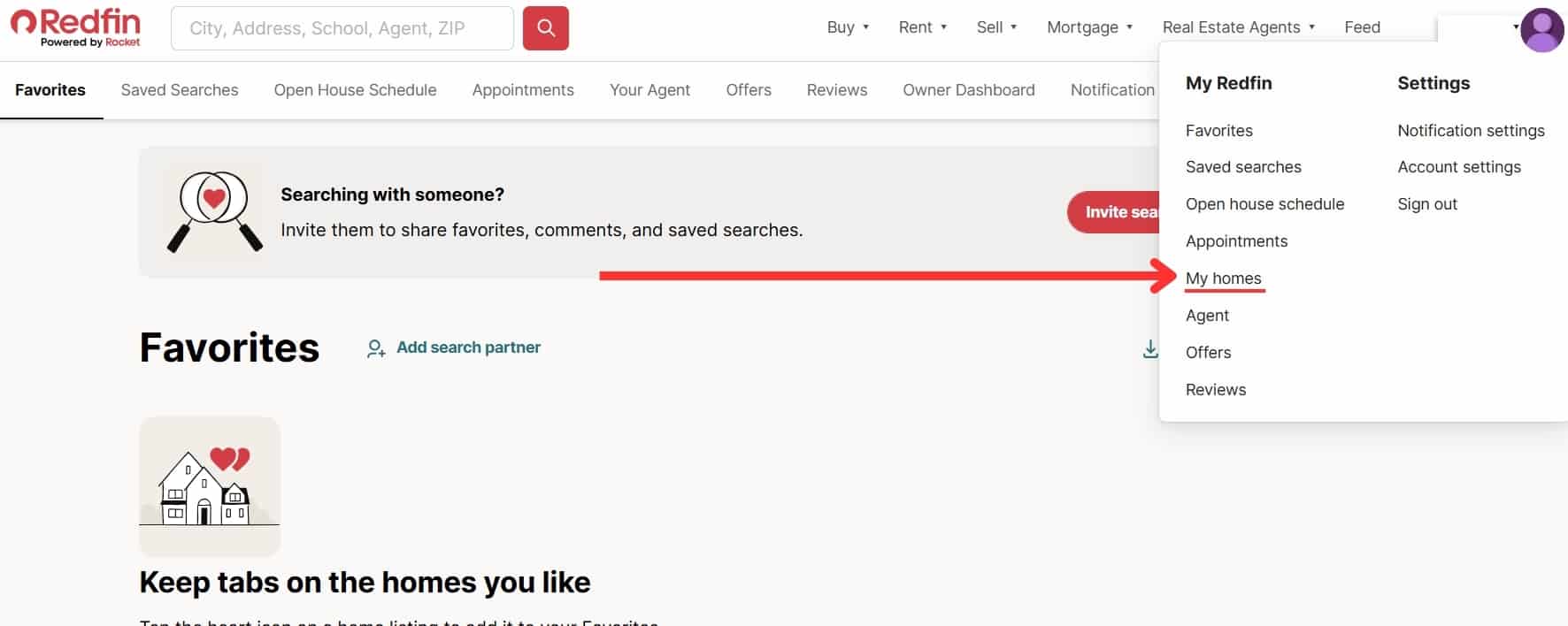
Step 1: Log in to Redfin, or create an account if you don’t have one. Hover over your profile icon and click “My Homes.”
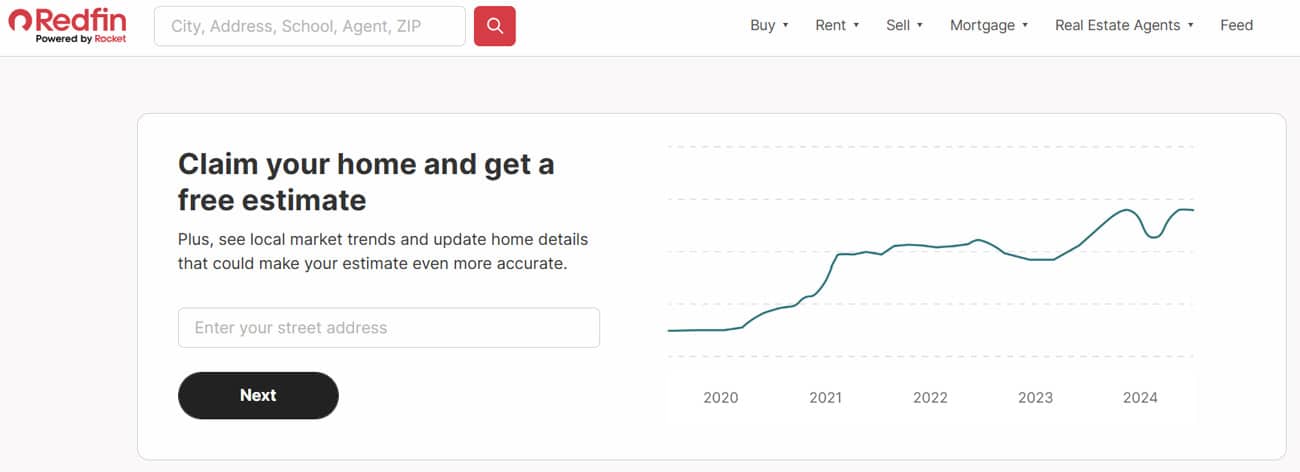
Step 2: Type your address into the search bar and select it from the dropdown to open the property page.
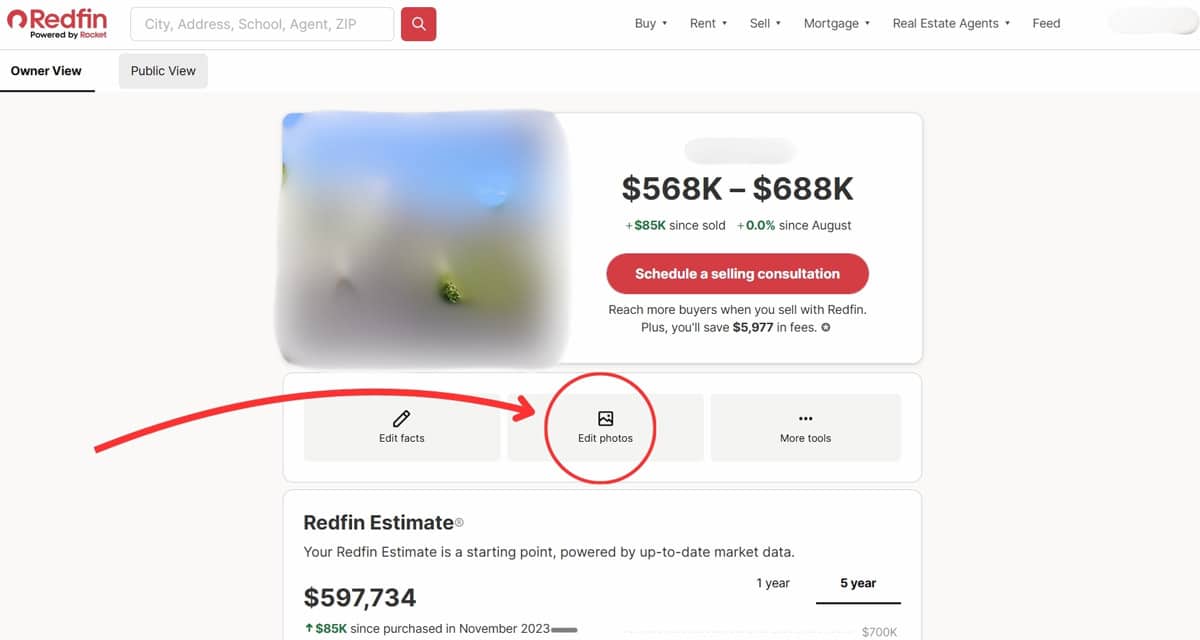
Step 3: Click “Edit Photos.” If you haven’t verified ownership yet, you’ll need to do that first.
Step 4: Check the box next to “Hide Listing Photos.” A pop-up will ask you to confirm. Click “Yes, Hide Photos.”
Step 5: Once confirmed, your photos come down immediately, and the listing page will show the Google Street View image of your home in their place.
Step 1: Open Google Maps.
Step 2: Type your home address into the search bar and press enter.
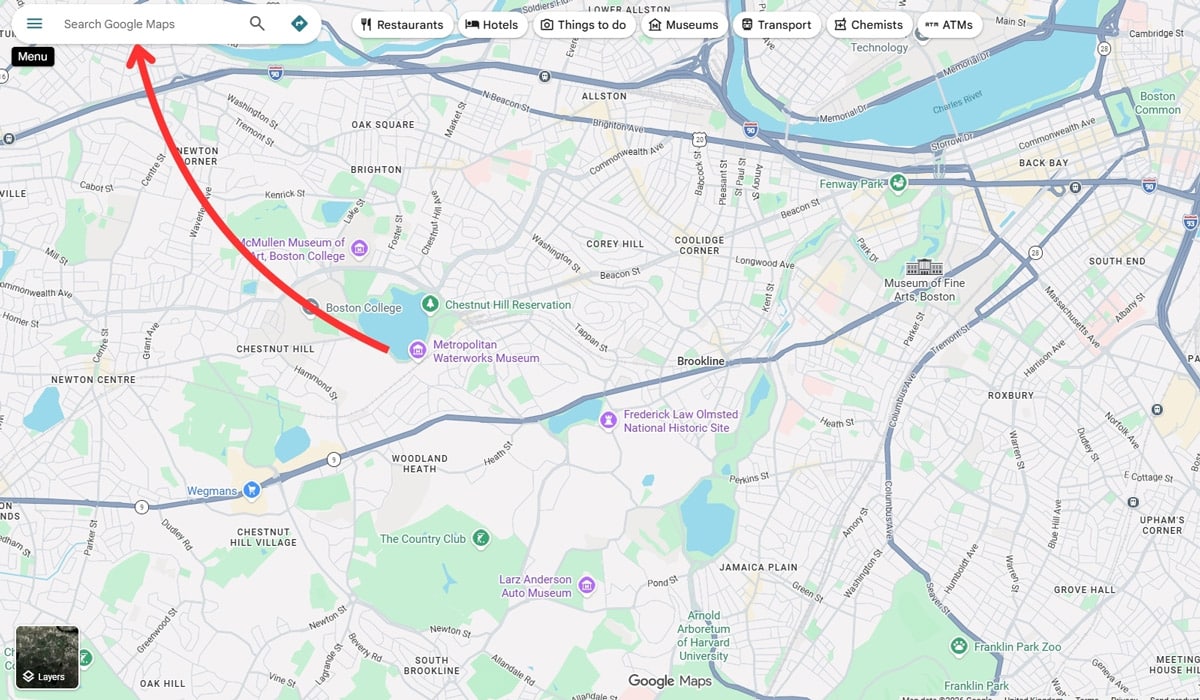
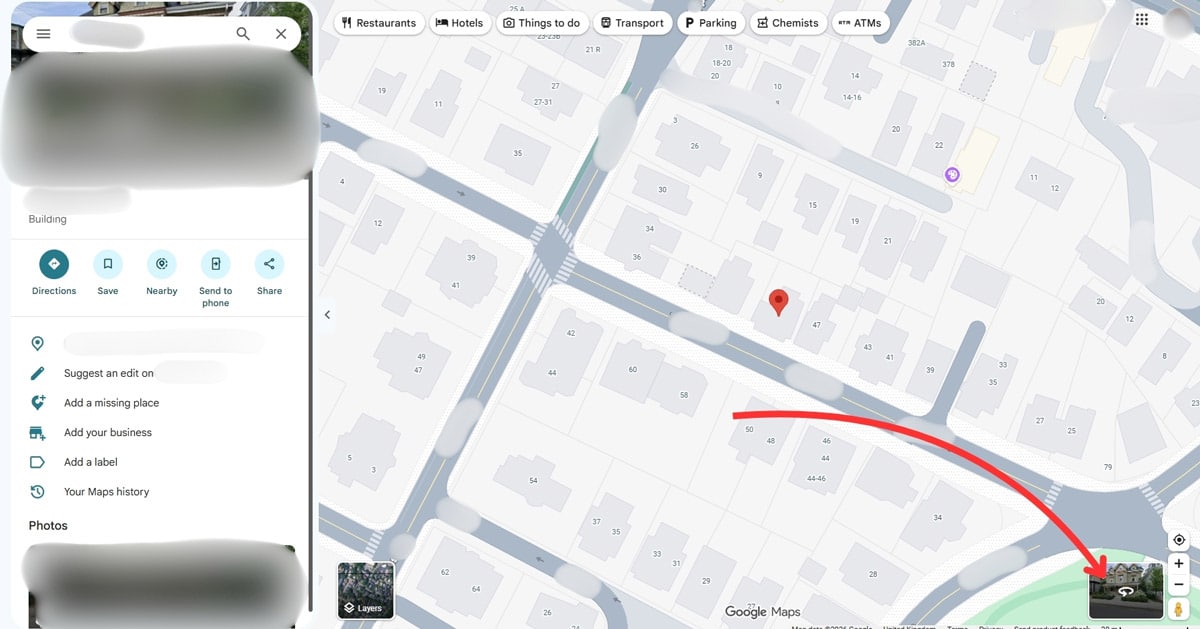
Step 3: Open Street View on Google Maps, either by clicking the photo of your house or dragging the yellow Pegman icon onto your location on the map.
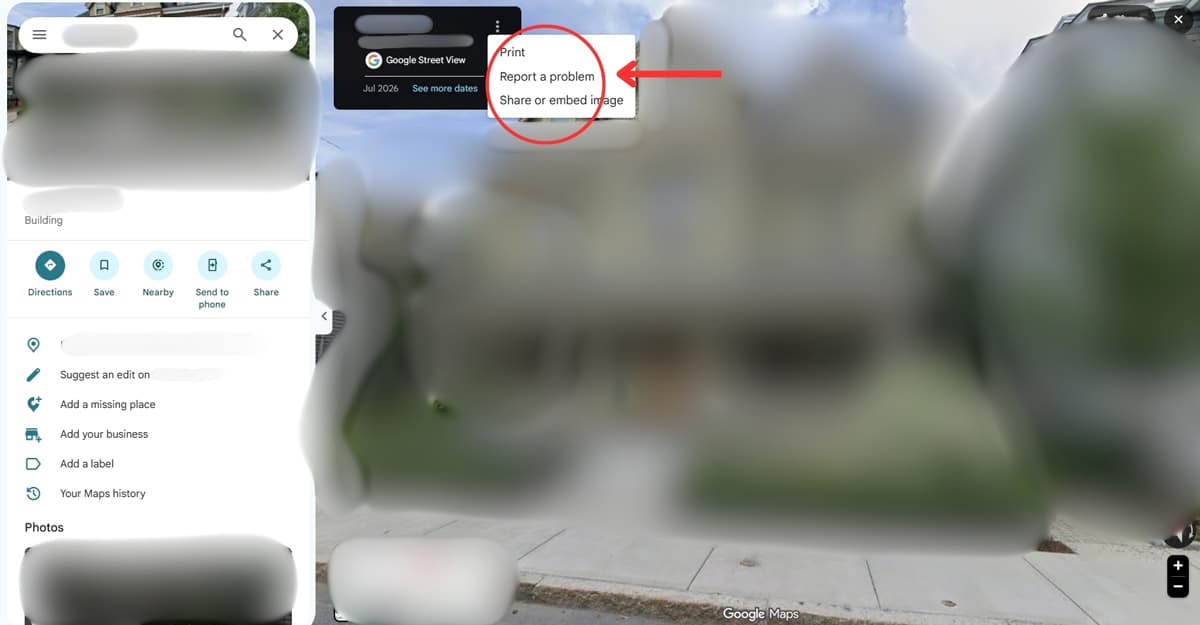
Step 4: Click the three dots in the address box and select “Report a Problem.”
Step 5: Use your mouse to pan and zoom until your house is centered inside the red adjustment box.
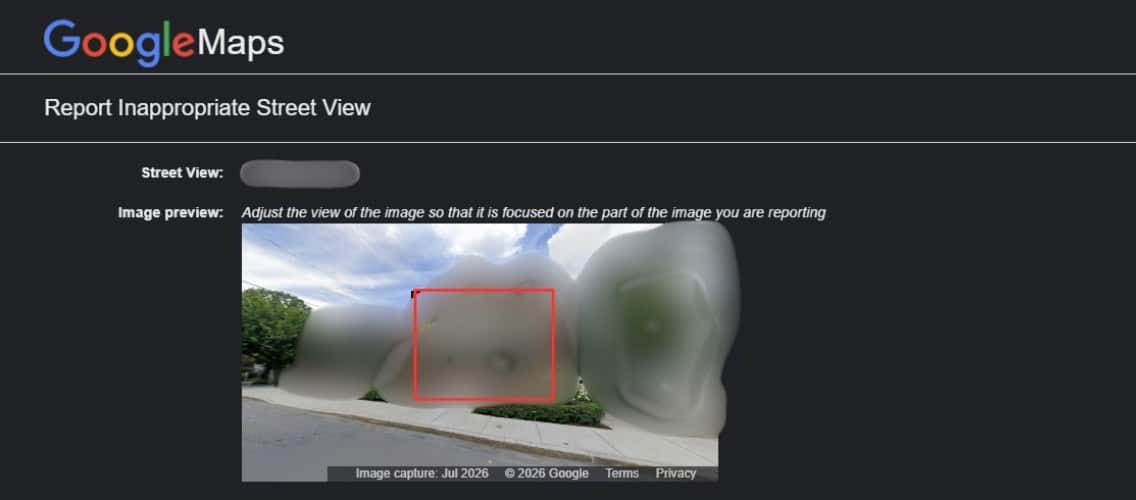
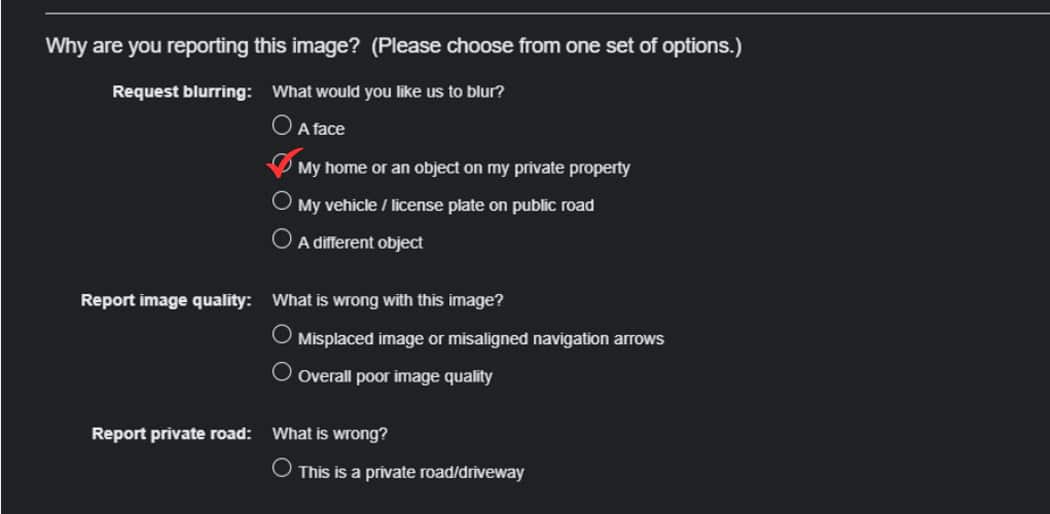
Step 6: In the questionnaire, under “What would you like us to blur?”, select “My Home.”
Step 7: Verify ownership by uploading a document that establishes proof of address, such as a utility bill or lease agreement dated within the last six months.
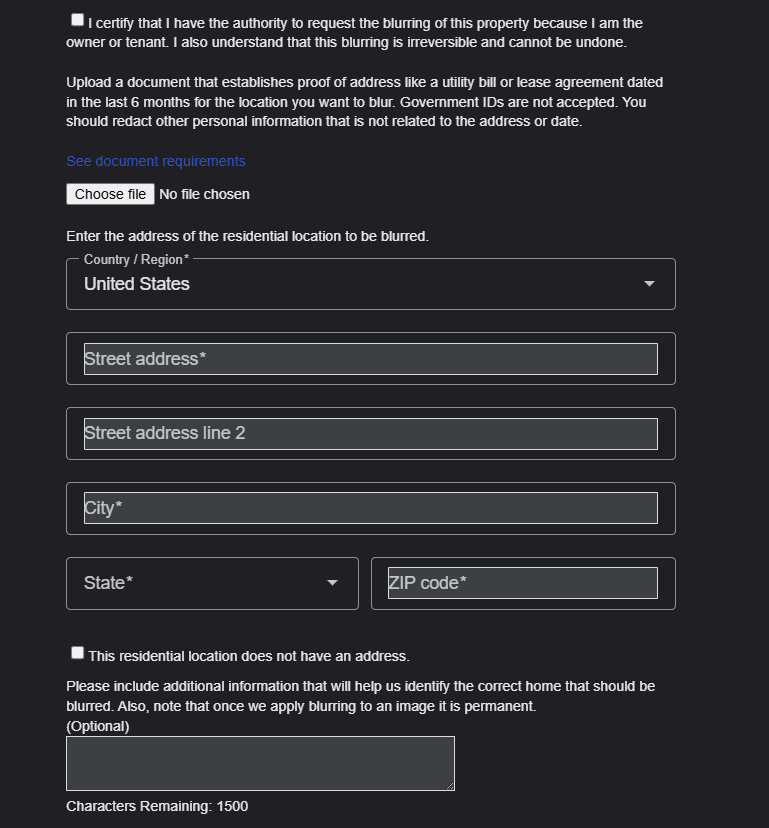
Step 8: Finish the questionnaire, enter your email address, complete the CAPTCHA, and submit.

Why Remove Photos of Your Home From Real Estate Sites?
Old listing photos don’t disappear when a sale closes. They stay live on Zillow, Redfin, and in search results indefinitely. That creates two different problems.
The first is security. A full set of interior photos is effectively a floor plan showing where the doors and windows are, how the rooms connect, and what’s worth taking. Riverside, California police told Fox News in February 2026 that detectives routinely find Zillow and Redfin searches on the phones of burglary suspects they’ve arrested. And it’s not just the photos worth checking — the same listings usually have your address attached, too. If that address is turning up elsewhere in search results, here’s how to get personal information like that removed from Google.
We’ve seen this firsthand with professional athletes and other high-profile clients specifically. Once a home’s layout is public, it’s a blueprint for anyone who wants in.
The second is about impression. Clients relisting a home they’ve since renovated don’t want old, unflattering photos still surfacing. A house that didn’t look its best before isn’t what you want a prospective buyer to see first.
Frequently Asked Questions
No, not if the home is already off the market. Resale value is driven by comps, condition, and appraisal at the time you sell, not by whether old interior photos are visible today. The one exception: if your home is currently active for sale, hiding photos will hurt buyer interest and showings, so this only makes sense for homes that have already closed.
It depends on the platform. For Google Street View, both homeowners and tenants can request a blur. For Zillow, Redfin, and other real estate sites, claiming a listing typically requires proof of ownership, so renters usually can’t hide photos on those sites directly, but can ask the property owner or listing agent to do it on their behalf.
Just images. Hiding or blurring photos doesn’t remove your address, tax records, sale history, or public property records from these sites or from Google. Those live in separate databases and require their own removal or suppression process. See our guide on how to remove public records online for more information.
No. Google states that once a blur is applied, it’s permanent and can’t be reversed by you or by Google. Keep that in mind before submitting the request, since there’s no “undo” if you change your mind later.
Zillow, and RedFin usually reflect hidden photos within minutes of saving. Trulia updates automatically once your Zillow change syncs, which can take up to a day. Google Street View blurs take the longest since Google manually reviews each request, typically a few days before the blur appears.
Conclusion
Hiding your home’s photos on Zillow, Redfin, and Trulia — and getting Street View blurred — takes minutes once you’re in the right account. But an old listing is usually just one piece of a bigger exposure problem: your address, your floor plan, and details about how you live are sitting in places you didn’t put them and can’t easily monitor on your own.
If you’re already dealing with something bigger than an outdated listing — harassment, a stalker, a legal dispute, or unwanted attention that’s followed you online — a real estate listing is rarely the only place your personal information is showing up. Reputation911’s online privacy services can help you find and remove that kind of exposure wherever it appears, not just on real estate sites. Request a free consultation to see what’s out there with your name on it.